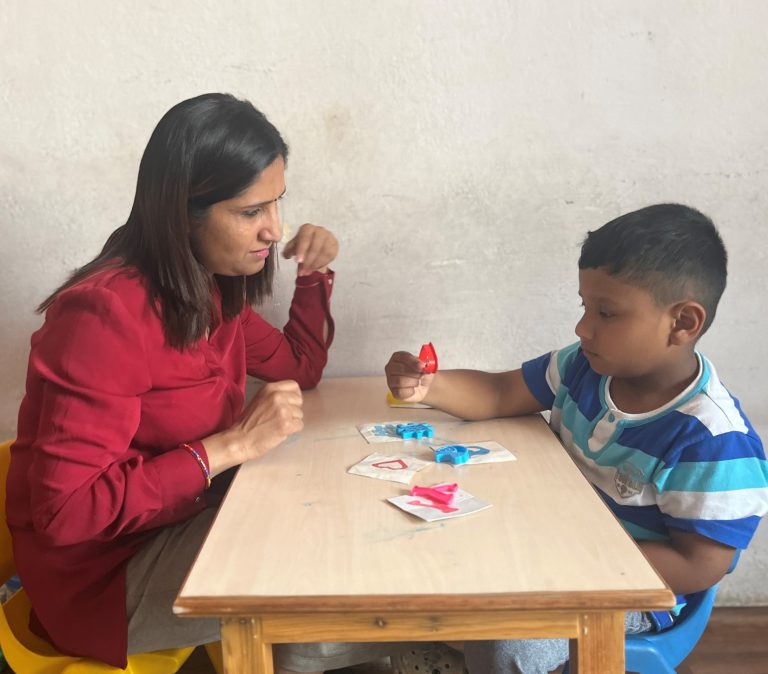
Occupational Therapy (OT) or Ergo medicine is a health care profession that refers to introducing and reintroducing tasks to enhance performance. It derives a therapeutic use of daily activities to aid with sensory issues, ease of functioning, etc. It was developed during World War II where wounded soldiers were given tasks like knitting, painting, etc. for rehabilitation and enhancement of daily activities.
Today, OT has developed as a profession in many different medical fields such as geriatrics, peads, orthopedics, neurology, hospice care, etc. Through various different approaches of assessment and sensory integration therapy, an occupational therapist can immensely improve the quality of life for children and adults dealing with sensory processing disorder (SPD), Autism, ADHD, learning disorders, muscle tone issues and even speech.
In Autism Spectrum Disorder (ASD), individuals are often accompanied with sensory issues (hypersensitivity and hyposensitivity) and executive functioning issues which may cause them a lot of physical and mental distress, giving rise to problem behaviors. With the help of OT, their sensory needs will be assessed and worked on to eliminate all barriers to learning, while simultaneously training them for daily skills.
Received overcame oh sensible so at an. Formed do change merely.
If you suspect that your child may have autism, the first step is to consult with your pediatrician or family doctor. They can refer you to a specialist who can diagnose autism, such as a child psychiatrist, neurologist, or developmental pediatrician. These professionals will also direct you where to go if your child is diagnosed with ASD. It’s important to get an accurate diagnosis as early as possible, so that you can access appropriate support and interventions for your child.
After diagnosis, visit organizations working with ASD (OR just drop in at Avaani Foundation!) to consult the next best step for your child which will depend on your child’s individual needs and diagnosis. Some may benefit from early intervention services such as ABA therapy, Speech Therapy or Occupational Therapy while others may need support in the classroom or specialized educational programs. Normally, we advise both parents and children to partake in Parent-Child Training Program, where parents/ guardians learn about Autism and how to train their child.
No, Autism is a lifelong condition, and there is currently no cure for it. However, one can learn skills to help them learn social significant behaviors and coping strategies, navigate social situations and communicate more effectively with relevant therapies and support programs. If you have heard about Stem Cell Therapy, this is an unproven, experimental treatment for Autism that is still under research. No scientific claims have been made about its effect on Autism.
As far as we know today, No. Diagnosis of ASD in adults are commonly due to regressive nature of Autism, where a person loses certain social, communicative or physical skills and abilities. This may cause a late diagnosis in adults, but does not suggest that they developed ASD later in life.
The term “Virtual Autism” refers to a phenomenon where excessive exposure to electronic screen media is believed to cause ASD-like symptoms. This is a topic under research and has no concrete scientific conclusions whether it is really a different type of Autism or if it is just typical ASD triggered by excessive screen time.
© 2026 Created by Avaani Foundation